From Pirate to Admiral: Decoding Niklas Zennström's "Storm Sailor" Face
Türkçe: bu analizi Türkçe okuyun →
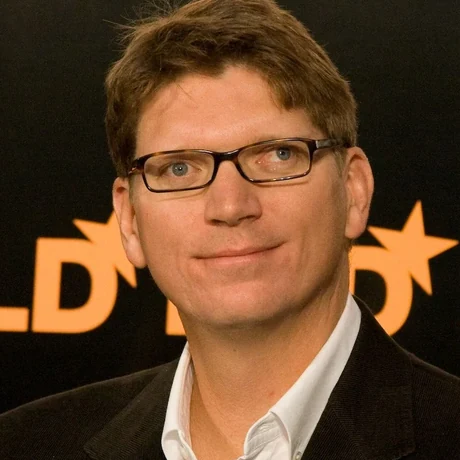 NZNiklas Zennström
Photo: “Niklas Zennström2”, Eirik Solheim / Wikimedia Commons, CC BY-SA 2.0, adapted
This article preserves the physiognomy vocabulary I used when it was first published. In my current practice I treat facial morphology not as a definitive verdict on personality or behaviour, but as a communication hypothesis that must be verified through behaviour, context and questions.
See my current method →Every empire has its pirate era. In 2001, the Swede behind Kazaa, the file-sharing software that haunted the music industry, was running the world's most downloaded program under a hail of record-label lawsuits. Two years later, the same man demolished the telecom giants' century-old revenue model with a single question: "Why shouldn't a phone call be free?" Skype was born in 2003 and sold to eBay for $2.6 billion in 2005. And in 2006 the former pirate became an admiral of the regular navy: Atomico, one of Europe's largest venture funds, dedicated to financing Europe's own tech giants.
In my Taavet Hinrikus column we read Skype's employee number one; today the ship's captain is on the table. How does one face carry both pirate and admiral? The answer is written across Zennström's long, bespectacled, unshakeable face.
1. The Long, Narrow Face: A Strategist Who Lives by the Plan
Zennström's long, narrow, vertically drawn face reads in physiognomy as the systematic, planned, goal-driven, and persistent build: highly attentive, reluctant to leave the plan, yet masterful in crisis management. A long face loves control; the tower in my Gurley column was the American version, Zennström is the Scandinavian one: less podium, more chart table.
The proof is in the career's rhythm: Kazaa (2000), Skype (2003), Joost (2006), Atomico (2006), a new ship every three years, but always the same course: decentralize whatever is centralized. That is not coincidence; it is a plan.
2. The High, Broad Forehead Behind Glasses: Cartographer of the Big Picture
That high, broad forehead reads in my physiognomy experience as strategic thinking, foresight, and big-picture vision; the glasses are this column's classic observation, the frame of an analytical gaze. Where everyone else saw piracy, this forehead saw infrastructure: Kazaa's peer-to-peer technology was not a trick destined to rot in court files, but the foundation of the world's cheapest communication network.
The evidence is dated: the same P2P architecture moved into Skype in 2003, reached tens of millions of users within two years, and in 2005 eBay paid $2.6 billion. Microsoft's $8.5 billion acquisition of Skype in 2011 was the official title deed to the map that forehead had drawn.
3. Thin Lips: A Compass Needle That Doesn't Tremble in the Storm
Zennström's thin lips mark, in physiognomy, the fast-deciding, pragmatic build that keeps emotions private. Physiognomy also record the risk: such faces can appear distant, cold. But it is precisely this composure that saves ships in storms.
Consider: in the early 2000s, the entire legal army of the music industry was hunting Kazaa, years of lawsuits, injunctions, intercontinental legal chess. Most founders either fold under that pressure or spin out in anger. Zennström never put his feelings on the table; he separated the company from the technology, left the contested ship on time, and carried the same engine into legal waters, Skype. Thin lips care for neither apologies nor boasts; they correct the course.
4. The Long Chin: Diplomat of Heavy Seas
In my physiognomy experience, a long chin signals honesty, patience, persistence, and diplomatic composure. Zennström's long chin takes the stage in his career's second act: in 2006, while the dogma "no world-class tech company can come from Europe" still ruled, he founded Atomico and vowed to prove the opposite. With nearly two decades of patience he has carried capital and counsel to founders across Europe, to the generation of the Hinrikuses and Siemiatkowskis. A short-chinned face would have changed course long ago in this marathon; the long chin is a man of heavy seas.
5. The Weathered Look of a Sailor: Signature of the Water Element
And the most poetic detail of this face: Zennström is a real sailor. With racing yachts named Rán he has won some of the world's toughest offshore races, the Fastnet victories of 2009 and 2011 are still recalled in sailing press. In physiognomy the Water element stands for wisdom, perseverance, creativity, and boundless flow, from P2P file sharing to free calls to continent-wide capital flows, every line of this career is written in water. The wind-worn firmness in that face was earned on a deck, not behind a screen.
Conclusion: Metal's Discipline, Water's Course
Metal and Water sail the same ship on Niklas Zennström's face: in the long, narrow lines and thin lips, Metal's discipline, distance, and perfectionism; in the sailor's spirit and that borderless career course, Water's wisdom and flow. Thiel's Metal sits at a chessboard; Zennström's Metal hoists a sail.
Perhaps the lesson is this: what separates the pirate from the admiral is not courage, both have plenty. The difference is being the man still holding the map when the storm dies down. When your storm passes, what will be left in your hands?
The theme of holding course in a storm and finding a new direction in this reading of Niklas Zennström reaches beyond one founder; it also raises the question of who carries which role in a team and how different characters complete one another. To bring this perspective into your own founding or leadership team, explore Startup Team Architecture.
This theme in training: Startup Takım Mimarisi (Turkish) →