The Philosopher-Gardener of the Startup Age: Decoding Paul Graham's "Wise Gardener" Face
Türkçe: bu analizi Türkçe okuyun →
 PGPaul Graham
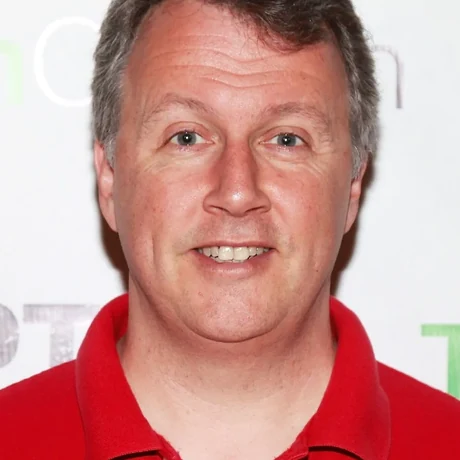
Photo: “Paul Graham TechCrunch Disrupt New York May 2011”, TechCrunch / Wikimedia Commons, CC BY 2.0, adapted
This article preserves the physiognomy vocabulary I used when it was first published. In my current practice I treat facial morphology not as a definitive verdict on personality or behaviour, but as a communication hypothesis that must be verified through behaviour, context and questions.
See my current method →Silicon Valley loves a show of force. I've written plenty in this column about the investor archetype who sits down with billion-dollar funds and moves markets with a single signature, Peter Thiel's icy "Metal" chess mind still lingers in readers' memories. Yet the man with perhaps the strongest claim to being the architect of the modern Valley is neither a mega-fund titan nor a stage star. He's a man who wrote tiny $12,000 checks and cooked dinner for young founders: Paul Graham, co-founder of Y Combinator. The man who sold Viaweb to Yahoo for $49.6 million in 1998, who planted the first seeds of Airbnb, Dropbox, Stripe, and Reddit through YC in 2005, and whose essays have raised two generations of entrepreneurs.
So how does someone become one of the most influential investors on Earth while keeping the humility of a gardener? In face reading, the answer is written across Graham's soft-featured, broad-browed, smiling face.
1. The High, Convex Forehead: A Refinery of Ideas
The first thing you notice is the high, broad, convex forehead revealed by a deeply receded hairline. Physiognomy notes offer three readings at once here: a high forehead is associated with strategic thinking and foresight; a convex forehead signals an innovative, exploratory mind; and thinning hair is traditionally read as intellectual power taking the lead over physical power. A hairline that opens far back is often observed in people who think freely and decide independently.
His career reads like a chapter-by-chapter confirmation: philosophy at Cornell, a Harvard PhD in computer science (1990), then painting at RISD and in Florence. Housing a philosopher, a hacker, and a painter in one head requires exactly this kind of spacious "idea refinery." His 2004 book Hackers & Painters is, quite literally, this forehead's book.
2. Curved Eyebrows: The Loyalty of a Twenty-Year Crew
In face reading, eyebrows represent siblings and friends, the bonds we carry through life. Graham's curved, soft eyebrows are the form physiognomy associates with warm, supportive people who build deep emotional bonds.
The evidence? Graham never built anything alone. He founded Viaweb in 1995 with his college friend Robert Morris; a decade later he co-founded Y Combinator with Morris, Trevor Blackwell, and Jessica Livingston, whom he married in 2008. The same core crew has held together for a quarter century. It's the polar opposite of the Storonsky-style "lone wolf" face: curved eyebrows grow empires through partnership.
3. Narrow, Smiling Eyes: The Skeptical Editor's Gaze
Graham's eyes are small and analytical, narrowing almost shut when he smiles. In physiognomy, narrow eyes mark the "measure three times, cut once" mind: skeptical, detail-oriented, always analyzing the target. Recall the deep-set, glacial skepticism of Peter Thiel from an earlier column, Graham's narrow eyes come from the same analytical family, with one crucial difference: Thiel's is a cold skepticism; Graham's is a smiling one. Inquiry softened by curiosity.
The real-world signature of these eyes is YC's legendary 10-minute interview: a gaze that can extract a founder's essence in minutes from thousands of applicants. They're also the eyes of the ruthless editor who revises his essays dozens of times before publishing. Igniting a debate across the entire management canon with a single September 2024 essay, "Founder Mode", proves this skeptical gaze doesn't age.
4. The Fleshy Nose Tip: A Seed Bank
In physiognomy, the nose says "I am searching", it represents the hunt for resources. The fleshy tip of Graham's soft-lined nose is read in my physiognomy experience as a marker of acquiring and accumulating ability. But note: this is not Storonsky's eagle nose crying "strike and hunt." This nose accumulates, and plants.
The numbers tell the story: the treasury filled by Viaweb's $49.6 million sale to Yahoo in 1998 became, from 2005 onward, perhaps history's most fertile seed bank. YC's early $12,000 checks grew into a forest now worth hundreds of billions, Airbnb, Dropbox, Stripe, Reddit, Twitch. Maximum sprout per dollar: the textbook application of a fleshy nose tip.
5. Full Cheeks and a Round Chin: The Earth That Hands Over the Throne
And here is the final cipher separating Graham from the Valley's power addicts: full cheeks and a round, soft chin. In face reading, cheeks store energy and the power to accumulate, while a round chin signals the empathetic leader who listens rather than dictates. Together they are the facial signature of the Earth element, service, patience, generosity.
The proof is the most radical move of his career: in 2014, at the peak of YC's power, he voluntarily handed the seat to Sam Altman, then moved to England with his family in 2016. How many founders in Silicon Valley history have passed the throne on time, without a fight or a lawsuit? A round chin doesn't dictate; it nurtures, hands over, and steps back to watch the garden grow.
Conclusion: Water's Wisdom, Earth's Garden
Four elements seem to share a table on Paul Graham's face: Water's wisdom in the high forehead and rounded lines, Earth's service in the full cheeks and round chin, Metal's analytical edge in the narrow eyes, and Fire's spark in the sly wit of his essays. But the conductors are clear: Water and Earth. Wisdom produces; earth distributes.
Perhaps Y Combinator's real formula was never money at all, it was a man with a gardener's face patiently teaching an eagle-faced industry how to plant saplings. Look in your own mirror: are you a hunter, or a gardener?
The theme of gardener leadership, mentorship, and founder development in this reading of Paul Graham reaches beyond one founder; it also raises the question of who carries which role in a team and how different characters complete one another. To bring this perspective into your own founding or leadership team, explore Startup Team Architecture.
This theme in training: Startup Takım Mimarisi (Turkish) →